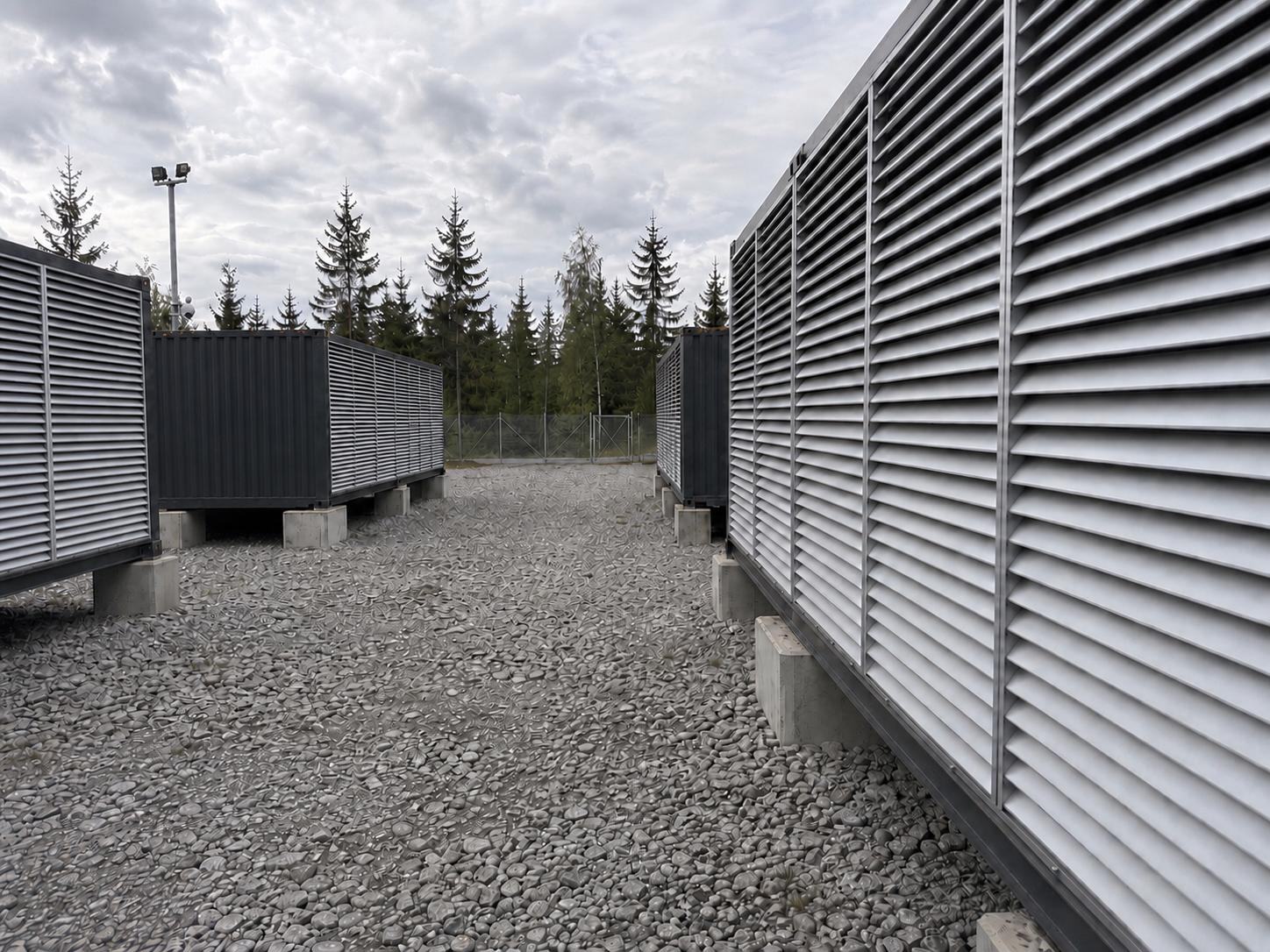
Bitcoin mining hosting on industrial power.
Your miners run in energised industrial facilities with cooling, network and a team on site, under one agreement. You keep the hardware and the rewards.
What a terahash earns, against what it costs
Hashprice is the expected revenue per terahash per day. The coin price, the difficulty and the fees behind it are outside a fleet owner's control; the hosting rate is the part agreed in writing before the machines ship.
Coin price
Converts the block reward into revenue. The most visible driver, and the one that moves fastest.
Difficulty
Adjusts on a schedule as hashrate joins or leaves the network. More competing hashrate means less reward per terahash.
Transaction fees
Paid on top of the block subsidy and variable from one period to the next with network activity.
Hosting rate
The cost side. A rate per kilowatt hour, through the machine's efficiency in joules per terahash, becomes a cost per terahash. Where hashprice falls to that cost, the machine stops covering its power.
You run the hardware. Everything under it is arranged for you.
- Site
- Industrial facilities built for continuous load
- Power
- Contracted and energised before hardware arrives
- Infrastructure
- Distribution, cooling and networking built for density
- Operations
- A team on site around the clock
Scope and onboarding
Power, cooling, networking, remote hands, monitoring and reporting, from intake to decommissioning. The full scope and the steps to live operations are described on the hosting page.
When load is switched down
Curtailment reduces or switches off load for a period. What it costs a fleet depends on who can call it, on what notice, whether the hours are capped and whether curtailed hours are billed. A cap on one type does not cap the others. At Northwatt, the treatment of curtailment is set out in the service agreement.
Grid
Called by the transmission operator or the utility when the network needs load reduced, sometimes at short notice.
Price-based
Load steps down when the market price crosses a threshold set in the power agreement.
Economic
The host reduces load because running it no longer pays at the current spread. The only record is the host's own, so the clause deserves a close reading.
Operational
Maintenance, a fault or a safety event at the site itself.
Your pool, your workers, changes in writing
The customer chooses the pool and keeps the worker configuration. Firmware changes and over- or underclocking alter a machine's draw and heat, so they need written approval under the service agreement.
Stays with you
- The choice of pool
- Worker names and pool configuration
- The commercial decision on what runs and when
Needs written approval
- Firmware changes
- Overclocking and underclocking
- Other modifications to hosted hardware
What decides the hosting rate
A hosting rate per kilowatt hour is built from the energy price, the charges for bringing it to the facility, taxes and levies, and the operator's cost of running the site. What sits inside the base rate and what is billed separately is written into the service order.
Energy
The price of the electricity itself, contracted at industrial scale.
Delivery
Transmission and distribution charges for getting the power to the facility.
Taxes and levies
What the jurisdiction adds on top of the energy and its delivery.
Operations
The facility, the cooling, the network and the people on site.
Hosting with Northwatt, or building it yourself
| With Northwatt | On your own | |
|---|---|---|
| Time to deploy | Weeks into energised capacity | Site, grid connection and build first |
| Power | Secured and managed by us | You negotiate and manage it |
| Up-front capital | Hardware only | Hardware plus site and buildout |
| Operations | On-site team around the clock | You staff and run it |
| Best for | Fleets that want to run, not build | Owning the whole stack |
Bitcoin mining hosting FAQ
Question not listed?
Send it through the form. Every message is read and answered by an operator.
Talk to SalesA service that runs your ASIC miners in a facility built for them: industrial power, cooling, network and staff on site, for a rate per kilowatt hour. You own the machines and the rewards they earn.
The rate depends on the load, the term and the hardware. Send the model, the quantity and the load in kW or MW through the quote form and we come back with a quote.
Yes. Every unit goes through receiving and inspection before install, and the intake record names its condition.
ASIC fleets for Bitcoin workloads. Air-cooled models run in our standard containers, hydro-cooled models where density calls for it. Talk to us about your models and power profile.
Hosting starts at 250 kW with a minimum term of twelve months.
Pool and worker configuration and the commercial decision on what runs and when stay with the customer. Firmware changes and over- or underclocking follow the procedure in the service agreement and need written approval.
Most fleets move from intake to power on within weeks, because the capacity is already energised.
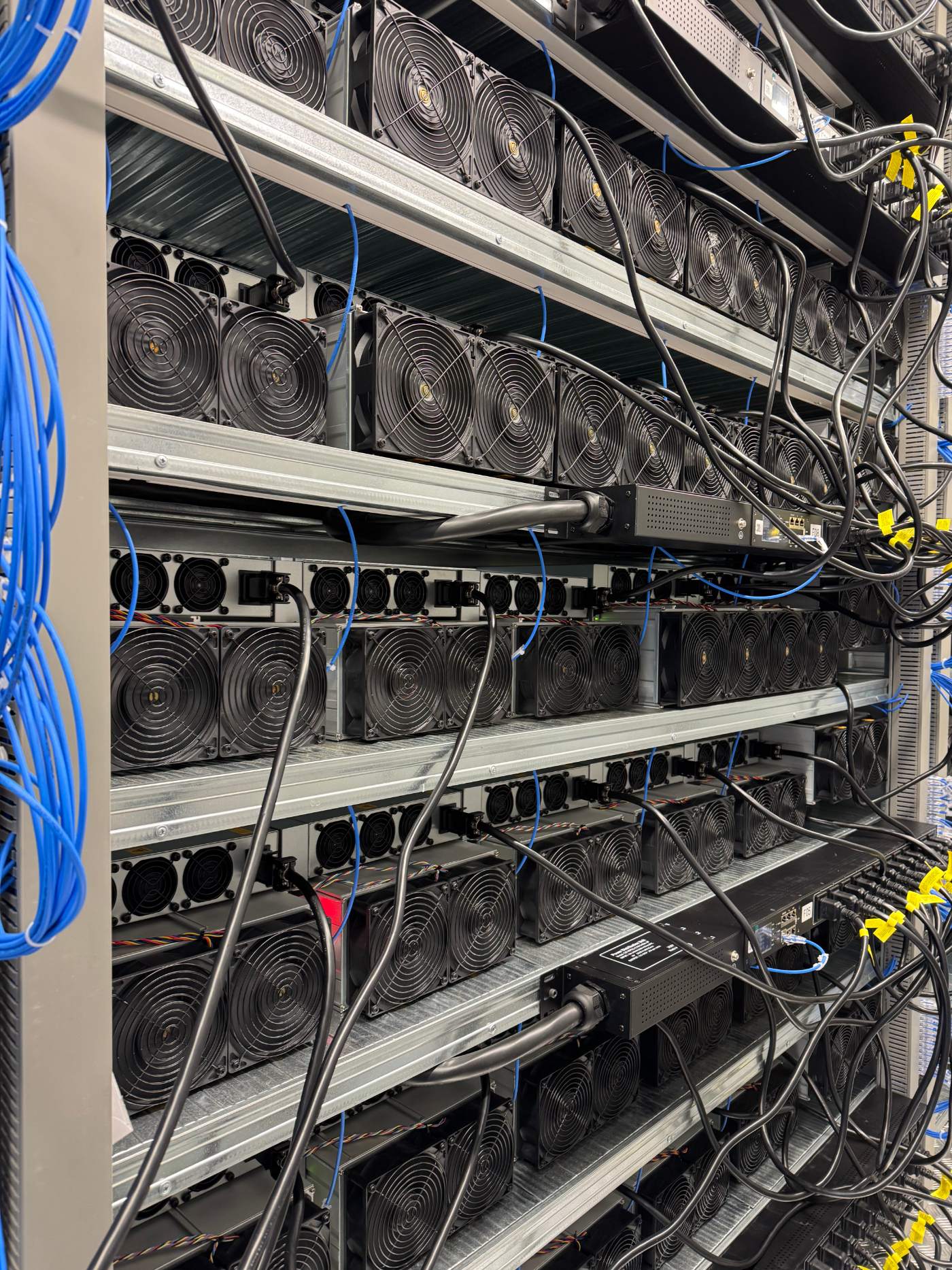
Let's talk capacity.
Tell us your hardware and your timeline. We will tell you where it can run.